The Smart Art of Investment
Virtual card

Due to the recent demonetization in India to curb black money & fake money menace, one of my family friends was complaining about cash shortage. I asked him, “why don’t you use credit or debit card for online shopping? You will not have any issues.” He replied that he was scared of using credit and debit cards for online shopping, so I explained to him as following on how to use the virtual card for online transactions, instead of real debit or credit card. Read More…
Wearable Finance & Intelligence: How Smart Devices Are Revolutionizing Banking and Payments
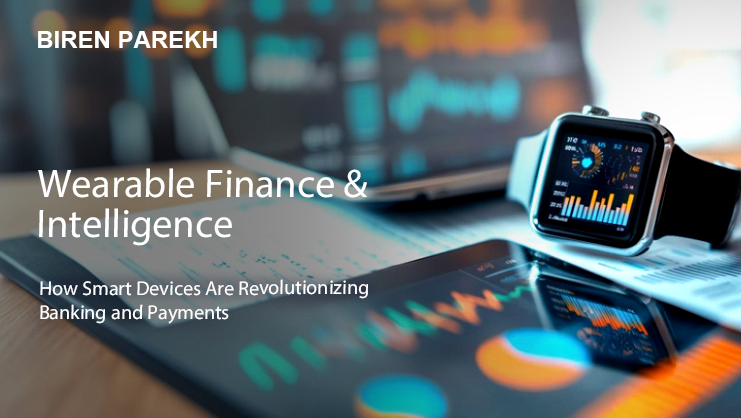
What if you could check your balance, pay for a coffee, or get personalized financial advice all with a flick of your wrist or a tap on your ring? Welcome to the era of Wearable Finance and Intelligence, where technology transforms everyday accessories into your ultimate financial command center. Forget clunky plastic cards and outdated banking apps, today’s innovation means your next payment, investment tip, or even credit alert could happen instantly, right from your watch, band, or even your glasses. With India leading global fintech adoption and banks getting smarter by the second, wearable finance is rapidly reshaping the way we manage and experience money making financial services more intuitive, secure, and personalized than ever before.
Wearable Finance vs. Traditional Mobile Banking: A Quick Comparison
| Feature | Traditional Mobile Banking App | Wearable Finance & Intelligence |
| User Experience | Touchscreen & manual | Hands-free, on-the-go, gesture/voice |
| Payment Methods | QR, NFC, online | NFC tap, biometric, smart tokens |
| Security | PIN, password, OTP | Biometric (fingerprint, face, ECG) |
| Real-Time Insights | App notifications | Instant, AI-driven on device |
| Personalization | Limited | Health & spending-based, contextual |
| Form Factors | Smartphone only | Watches, rings, bands, glasses |
| Innovation Speed | Moderate | Rapid, with AI and IoT integration |
The Explosive Growth of Wearable Finance
The wearable technology market is on a meteoric rise, forecast to reach US$ 230.15 billion by 2033, with double-digit growth rates year-on-year. In India, this is fuelled by a young digital population, RBI’s push for contactless transactions, and the rapid spread of fintech innovation across both metros and tier-II/III cities.
Trending Devices in 2025
- Smartwatches: Flagship brands like Titan Pay and Samsung driving mainstream adoption
- Smart rings & bands: Indus PayWear, Wear n’ Pay, and other tap-to-pay innovations
- Bank-branded wearables: SBI, Axis, and HDFC creating exclusive accessories for seamless payments
- Fitness trackers: Integrating health, lifestyle, and finance for holistic financial wellbeing
Wearable Intelligence: Smart, AI-Driven Finance Experiences
Wearable intelligence is where AI meets payments, blending advanced analytics with real-time finance. Today’s wearables don’t just facilitate payments, they learn your habits, anticipate your needs, and protect you with advanced security.
AI Features Shaping Wearable Finance:
- Biometric authentication: Fingerprint, voice, and even ECG-based verification for ultra-secure transactions
- Real-time spend analytics: Get AI-generated insights on your spending (and saving) patterns while you move
- Personalized nudges: Contextual advice and alerts based on your financial behavior, location, and calendar
- Voice-first banking: Pay bills, check balances or even invest hands-free with interoperability via Alexa or Google Assistant
BFSI and Fintech Impact: Beyond Mobile-First to “Wearable-First”
India’s BFSI sector is now targeting a wearable-first experience, using IoT and AI to deliver hyper-personalized, omnichannel financial services.
- Customer engagement: Banks use wearables to trigger personalized offers, instant approvals, and proximity-based promotions
- Deep consumer insights: Data from wearables informs new product development and dynamic credit scoring
- Seamless experience: Interlinking wearable, mobile, and online platforms for a unified, uninterrupted journey
Real-World Indian Examples:
- Titan Pay (SBI collaboration): NFC watch payments with multi-currency wallet features
- Axis ‘Wear n’ Pay’ bands: Tap, pay, and go for transit, retail, and dining
- IndusInd PayWear rings: Chip-enabled for secure transactions, globally certified
Financial Wellness & Everyday Use Cases
Today’s wearable finance extends far beyond payments:
- Budgeting & Alerts: Instant notifications and budget reminders based on real-time data
- Embedded insurance & rewards: Fitness-linked insurance premium discounts, loyalty points for hitting health goals
- Crypto & global payments: Devices that support both digital rupee and cryptocurrencies are emerging
- ATM withdrawal & cardless cash: Select wearables now enable OTP-free, cardless cash at ATMs
Challenges: Security, Privacy, and Legacy Integration
The rapid march of wearables brings new challenges:
- Data security & privacy: Biometric data and constant tracking require strong encryption and regulatory compliance (GDPR, RBI)
- Evolving cyber threats: Security updates must keep pace with increasingly sophisticated fraud scenarios
- Systems integration: Banks must bridge the gap between legacy platforms and real-time APIs to provide consistent, glitch-free wearable experiences
Future Outlook: The Next Wave for Wearable Finance & Intelligence
What’s next for wearable finance?
- AI-powered predictive finance: Real-time, personalized financial coaching based on your unique routines
- Sustainability in focus: Eco-friendly materials and responsible manufacturing for “green” wearables
- Financial inclusion: Affordable, regional language-integrated devices for rural India, expanding formal banking reach
- 360° financial wellness: Health, insurance, lifestyle, and payments combined delivering holistic wellness, not just banking
Conclusion: Why Banks and BFSI Must Act Now
The future of finance is not just digital, it’s wearable, intuitive, and AI-driven. Now is the time for visionary banks, fintech companies, and consultants to invest in wearable finance infrastructure, AI-powered intelligence, and the seamless blending of digital and physical worlds.
Strategic Recommendations:
- Build user-centric, secure platforms for the “wearable-first” BFSI customer
- Harness real-time wearable data for smarter decision-making and hyper-personalization
- Prioritize privacy, sustainability, and ecosystem integration to stand out in India’s fast-evolving market
Ready to lead India’s wearable finance revolution? Invest in the future where finance fits on your wrist, adapts to your lifestyle, and keeps you one step ahead in a connected world.
Web3.0 Impact on Banking

Banks have always taken great care to remain competitive in the market despite the other stressors that come with this category of business. The latest one on top of their list is Web 3.0, otherwise known as Virtual Reality, Augmented Reality, and Artificial Intelligence — all of which are just different flavors of the same thing: a much closer interaction between people and computers.
The main impact of Web 3.0 on the banking sector may not be as pronounced as expected, but it is more likely to be negative than positive. The banking sector has always been technology-driven and, with the help of Web 3.0, these banks may find it difficult to adapt to this environment.
Facts and studies done on the impact of Web 3.0 in banking sector
The recent BFA study was commissioned by the National Consumer Law Center (NCLC) and the American Bankers Association. It studied how banks were preparing for Web 3.0, which they identified as a major area of concern among banks.
The study surveyed over 300 banks and gathered their perspectives on how they were planning to adapt to Web 3.0. They found that most banks had already taken a proactive approach in addressing the future needs of consumers, but some major upcoming challenges need to be considered.
This includes technological limitations, operating costs, and legal constraints. One of the biggest worries is that customers will naturally gravitate towards payment methods with better customer service and security, such as credit cards or electronic wallets, instead of using their bank accounts.
Blockchain can enhance this process and lower these costs. Using blockchain for KYC purposes could reduce personnel requirements for banks by 10%, equating to cost savings of up to $160 million annually.
Web 3.0 will largely be built on three new layers of emerging technologies – edge computing, decentralised data networks and AI.
There is a growing application of ML to analyse large data sets in security. As attackers use ML, we need machines that can respond in seconds.
The cycle of change is undoubtedly constant, but its speed has certainly sped up during the pandemic. Going forward, Web 3.0 and transition towards decentralization, digital currencies, ability to monetize data effectively and stronger ecosystem collaborations for customer-centric service will continue to drive the evolution of the financial services industry.
Blockchain and crypto tokens can bring many potential benefits, such as faster and cheaper cross-border payments and trade finance, but they need to be more stable in value and have a credible backing.
Decentralized finance (Defi) refers to digital assets and financial smart contracts, protocols, and decentralized applications (DApps). Also based on distributed ledger and blockchain technology, Defi challenges the centralized financial system by disempowering the middlemen and focusing on peer-to-peer networks. The ‘total value locked in Defi’, which shows how much money is currently working in different DeFi protocols, has increased significantly in the last two years. There are several use cases of DeFi and they are continuously growing. It lets one send money around the globe, stream money around the globe, access stable currencies, borrow funds with or without collateral, start crypto savings, trade tokens, buy insurance, and manage one’s complete financial portfolio under one system.
There are several benefits of even Defi Insurance as below:
- Protection of Defi Deposits
- Protection against crypto volatility and flash crash
- Immediate redemption of tokenized crypto
- Protection against the risk of theft and attack on crypto wallets
- Protection of funds from hacks on exchange platform
- Identify fraudulent claims
- Increased reliability of medical history
- Reduced overhead cost because of efficiency and speed in the claim processing
Disadvantages of Web 3.0 in the banking sector
Blockchain technology has many advantages, but one prominent disadvantage is that it’s inherently secure without specific third-party support, since the system relies on a “trusted” third party—a node—to make sure the ledger is secure and that no one tries to tamper with it.
Therefore, blockchain developers have been working on a method of maintaining security after the protocol itself has been implemented. This is called “consensus,” and it enables the system to be secure even when some nodes operate independently.
The problem arises when only one node can maintain consensus and therefore make sure that the ledger remains secure. If that node goes offline or is compromised by an attacker, then the entire system can fall apart.
On other side, thefts and frauds are rampant on Web3. In 2021, crypto scams and theft are totally to $14 billion losses. So, security is the biggest threat in the Web3 world for BFSI segment.
In an article about Web 3.0, when discussing the impact of augmented reality on society, The Economist also included that “banking would be affected too” (The Economist 2011). The writer said that this technology would allow people to peer into their bank accounts without even logging in. It could also authenticate people remotely and control their finances at the same time.
Ending words
To fully understand the present banking sector, it is necessary to acknowledge that its nature has always been technology-driven since banking was first formed. As a result, all banks have also invested in new technologies to facilitate the operations and services that they offer to their customers. They have developed faster processing systems, better internet banking platforms, more reliable ATMs, and quicker payment gateways.
Realization should temper the urge to dismiss Web 3.0 financial services as fringe efforts that many in banking missed the potential of PayPal and Chime until they became huge competitive threats
The future of banking lies in Web 3.0. Someone will felt soon the impact of these technologies on the industry, especially for banks that are still rooted in their traditional business model. Web 3.0 is transforming the financial landscape and will, most likely, affect how banks operate.
ZERO To ONE

ZERO to ONE – By Peter Thiel
Recently, I again read this international bestseller after a few years. Its really a wonderful book.
As per the author, founders should ask one or more of the following seven questions related to their startup/business. If you don’t have good answers to these questions, you will run into lots of “bad luck” and your startup may fail.
1️⃣ The engineering question
Can you create breakthrough technology instead of incremental improvements?
2️⃣ The timing question
Is now the right time to start your particular business?
3️⃣ The Monopoly question
Are you starting with a big share of a small market?
4️⃣ The people question
Do you have the right team?
5️⃣ The distribution question
Do you have a way to not just create, but deliver your product?
6️⃣ The durability question
Will your market position be defensible 10 and 20 years into the future?
7️⃣The Secret question
Have you identified a unique opportunity that others don’t see?
If you nail all seven, you’ll master fortune and succeed. Even getting five or six correct might work.
Tesla nailed all seven, making it the most valuable company in a short time.
What is your view? Do you have any other points to add that might be secret sauce???
Recent Post
 Project v/s Product OrganizationJanuary 13, 2026In discussions, the debate often centers on which is more...
 Leadership Excellence AwardJanuary 11, 2026I was surprised and humbled to receive the Top 1% more...
- Invite a Financial Speaker to Discuss Strategic Innovation for Business GrowthDecember 26, 2025Businesses need more than traditional financial more...
Most Read
-
 Konark 2018
I was having dinner in a restaurant in Singapore wh...
Konark 2018
I was having dinner in a restaurant in Singapore wh...
-
 The State of Indian Finte...
India’s fintech landscape in 2025 is undergoing a signi...
The State of Indian Finte...
India’s fintech landscape in 2025 is undergoing a signi...
-
 Why 80% of AI Projects Fa...
Cognitive Project Management for AI (CPMAI) is a struct...
Why 80% of AI Projects Fa...
Cognitive Project Management for AI (CPMAI) is a struct...