A FinTech Keynote Speaker Explains Why a Dedicated Strategist Fuels Better Business Growth
The financial world changes fast, and understanding technology has become essential for every business. Startup founders, leaders, and finance professionals now rely on digital tools and smart financial strategies to stay ahead. This is why many companies look to experts like Biren Parekh, a well-known FinTech keynote speaker, strategic thinker, and industry leader for guidance.
With more than 27 years of experience in digital transformation across banking and financial services, Biren Parekh brings practical knowledge on how organizations can scale, innovate, and execute their strategies with confidence.
Why Having One Clear Strategic Voice Matters
Business technology decisions are no longer optional; they shape your customer experience, operational efficiency, and future growth. But with so many new tools from AI-powered analytics to blockchain and automated finance systems it’s easy to feel overwhelmed.
A dedicated FinTech strategist brings clarity and focus. They help businesses cut through the noise, define what technology truly matters, and build a strategy that aligns with long-term goals. Biren, as a seasoned keynote speaker on digital innovation and finance, often emphasizes that strategic direction transforms confusion into confidence.
Scalability That Works Not Just in Theory, But in Practice
Scaling a business is about more than hiring more people or launching more products; it’s about ensuring your financial and digital systems grow smoothly with demand. Without that, processes break, data silos emerge, and customer trust erodes.
With a strategist, your growth isn’t just bigger, it’s smarter and more resilient. Biren’s work in the Banking, Financial Services & Insurance (BFSI) sector highlights real challenges companies face when scaling digital finance solutions, and how strategic planning overcomes them.
Efficiency Through Automation and Insight
Manual tasks slow teams down, but not all automation is created equal. The key is doing the right automation at the right time. A FinTech strategist looks at your entire process from payments and compliance to reporting and forecasting and identifies where automation will make the biggest impact.
Biren often discusses how smarter systems don’t just save time; they unlock deeper financial insight, allowing leaders to respond faster to opportunities and risks.
Stronger Decision-Making with Real Data
Today’s business leaders can no longer depend on gut instinct alone — data drives growth. A FinTech strategist ensures your business isn’t flying blind by building systems that deliver real-time financial data, accurate forecasts, and predictive insights.
This means better decisions, made faster, with confidence. Biren’s keynote talks explain how data and strategy together create powerful outcomes for both startups and established enterprises.
Security and Compliance Without the Headache
As financial technology evolves, so do the risks. From cybersecurity threats to complex regulations, businesses need strong governance and compliance. A dedicated strategist brings structured checks and safeguards so you can grow without worrying about hidden pitfalls.
This peace of mind isn’t just technical, it builds trust with customers and partners alike.
Consistent Revenue Growth Through Strategic Innovation
When your systems are efficient, your operations scale safely, and your decisions are data-driven, revenue growth becomes predictable and sustainable. That’s the power of combining technology with strategy.
Biren Parekh’s global experience and recognition including being named a Top 25 Global Thought Leader in FinTech and Project Management shows that the businesses who invest in strategy outperform their peers.
Vision for the Future Sharing Insight and Inspiration
A great strategist doesn’t just solve today’s problems — they help you prepare for tomorrow. As a sought-after keynote speaker at institutions like IIT and IIM, Biren regularly shares insights on digital innovation, leadership, and financial transformation.
A dedicated FinTech strategist is more than a consultant; they are a growth partner. They help your business scale thoughtfully, operate more efficiently, and achieve revenue growth that lasts. And when that insight comes from a seasoned keynote speaker like Biren Parekh, it combines deep industry understanding with a visionary perspective.
If your business wants to thrive in the digital finance era, investing in strategic guidance isn’t just smart, it’s essential.
Biren Parekh is a trusted FinTech keynote speaker with over 27 years of experience in digital transformation, globally recognized for his leadership in FinTech and project management. His strategic guidance helps businesses of all sizes align technology with core goals, improve operational efficiency, and make smarter decisions that drive sustainable revenue growth. Through insightful keynotes, he delivers practical trends, real-world insights, and actionable strategies that empower teams to stay ahead of change, accelerate innovation, and invest confidently in future-ready technologies.
A Moment of Leaders Excellence: Honored with the CEO Excellence Award

A defining milestone in my professional journey receiving the CEO Excellence Award for Client Champion at Crisil. This recognition stands as a symbol of leaders excellence, something I’ve always tried to show through my hard work, new ideas, and teamwork. To share this achievement with my outstanding colleagues and celebrate in the presence of family made it all the more special.
This special award isn’t just a title, it shows the hard work we’ve done to make our clients happy, improve the way we work, and show real leaders excellence. It also proves how important agile leadership is in today’s world. Especially in today’s dynamic business landscape. Staying nimble, responsive and proactive is at the heart of every successful team and our journey was a testament to that mindset.
Our success was built on a culture of leadership and team building, where every voice mattered and innovation was encouraged. We practiced strategic leadership to foresee client needs, pivot quickly and execute solutions with precision. These are not just buzzwords; they are the pillars that define leaders excellence and help organizations grow sustainably.
The real magic, however, happened through collaboration. Together, we practiced agile leadership by adapting strategies, empowering individuals and staying resilient through challenges. We embraced innovation leadership by thinking beyond the conventional and continuously improving every aspect of our work.
Winning in the Client Champion category underlines our ability to nurture strong relationships. This couldn’t have happened without the backing of senior leadership, who have always believed in recognizing leaders excellence and encouraging a culture of excellence across the board.
I must also mention that I just missed an award in another category and while that might seem like a near miss, it’s yet another reminder that leadership is a journey. Strategic leadership teaches us to learn from every experience, fine-tune our approach and come back stronger. That’s what leadership excellence is truly about consistency, perseverance and growth.
As a leadership management speaker, I often emphasize how vital it is to create a space where people feel empowered to contribute. That’s how leadership and team building come alive when every individual feels connected to the vision and empowered to act.
To everyone who has been a part of this journey my fantastic team, my mentors and my supportive family thank you. You’ve made this possible. I’m deeply grateful for the energy, encouragement and inspiration I receive from you every day.
If you’re seeking a leadership speaker in India who blends real-world results with practical insights, I’d be honored to share more on agile leadership, strategic leadership and how to drive leaders excellence in your organization. Let’s keep raising the bar together.
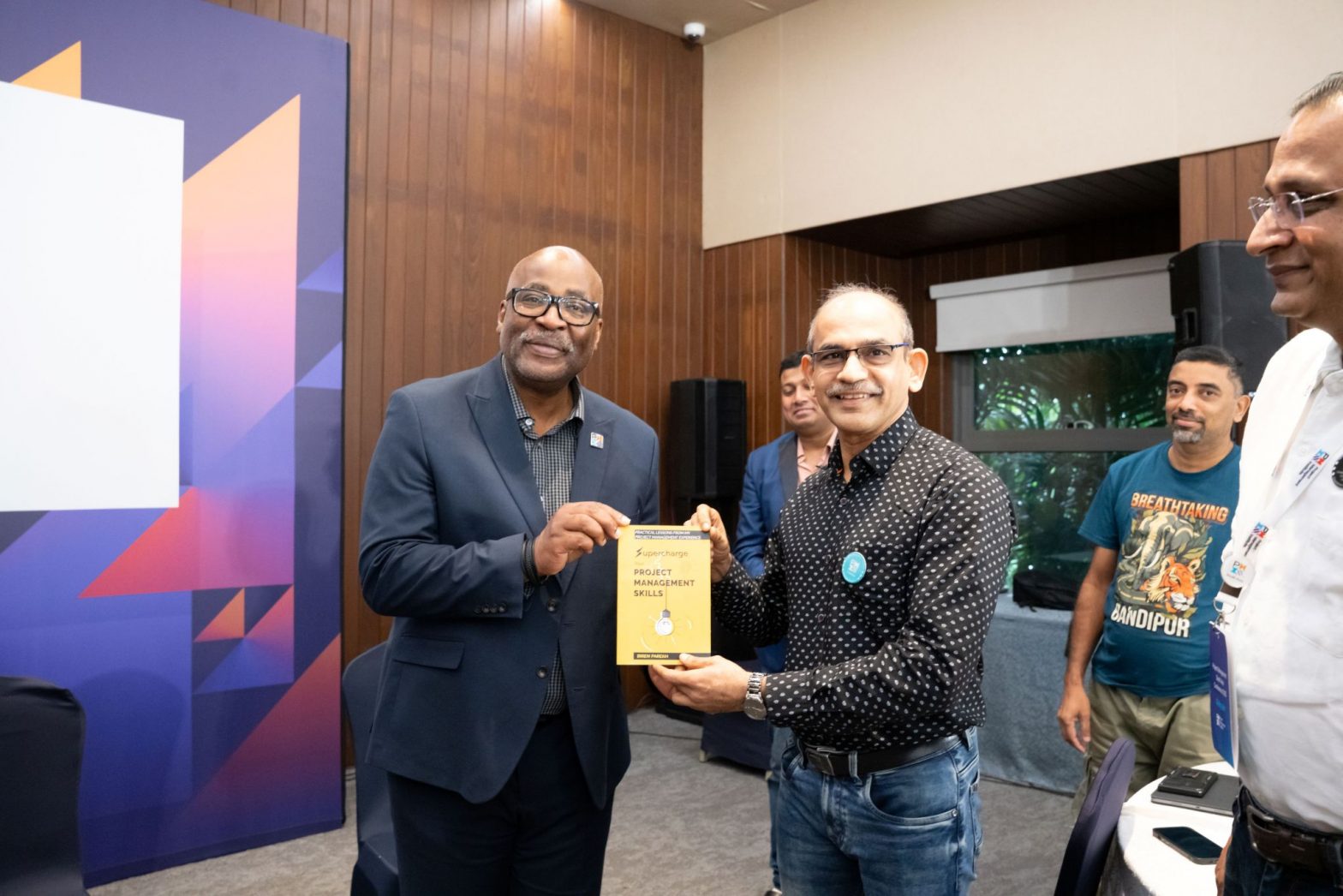
A Surreal Moment: Presenting My Book to the Chair of the PMI Board
Agile Design Thinking: The Future of Smarter, Faster Innovation
Sometimes innovation doesn’t come from working faster, it comes from working smarter. The real game-changer happens when creativity meets structure, when ideas evolve with purpose, and when teams collaborate around what truly matters to users. That’s exactly what Agile Design Thinking delivers.
It’s more than just a method; it’s a mindset that blends empathy with efficiency. This blog explores what Agile Design Thinking is, why it’s essential for 2025 projects, how to implement it effectively, and how leaders can use it to drive meaningful innovation.
What Is Agile Design Thinking?
To understand Agile Design Thinking, it helps to look at its two foundations: Design Thinking and Agile methodology.
Design Thinking is a human-centered approach that helps teams understand users deeply before creating solutions. It encourages curiosity, empathy, and experimentation. The process generally follows these five stages:
- Empathize: Understand user behaviors and challenges
- Define: Identify and frame the real problem
- Ideate: Generate a wide range of possible solutions
- Prototype: Create tangible models to test quickly
- Test: Gather feedback and refine based on user insights
Agile methodology, on the other hand, focuses on adaptability and continuous delivery. It promotes:
- Iterative development: Working in small, incremental sprints
- Collaborative teamwork: Encouraging cross-functional cooperation
- Quick feedback loops: Making constant improvements as the project progresses
When combined, these two create Agile Design Thinking an approach that ensures teams are not only moving fast but also in the right direction. Design Thinking defines what to build, while Agile defines how to build it efficiently.
This integration brings out the best of both worlds, a process that’s flexible, creative, and deeply user-focused.
Agile vs Design Thinking: The Key Differences
Agile and Design Thinking share the same goal to solve problems effectively but their approaches differ. Agile is process-driven, while Design Thinking is people-driven. When merged, they complement each other perfectly.
| Aspect | Agile Methodology | Design Thinking | Agile Design Thinking (Combined) |
| Focus | Speed and adaptability | Empathy and creativity | User-driven innovation with agility |
| Goal | Deliver fast and continuously | Solve the right problem | Create relevant solutions quickly |
| Approach | Short, iterative sprints | Empathize, Ideate, Prototype | Continuous innovation and testing |
| Outcome | Working software | Human-centered ideas | Practical, tested, and impactful results |
Organizations that integrate both achieve a balance between execution and empathy, ensuring that each sprint delivers real value.
Why Agile Design Thinking Matters in 2025
The professional landscape is changing rapidly. Businesses are navigating AI integration, digital transformation, and evolving customer expectations. In this environment, traditional linear models no longer work.
Agile Design Thinking helps organizations adapt, innovate, and stay relevant. It allows teams to respond to change while keeping user needs at the center of decision-making.
Key reasons why Agile Design Thinking is gaining importance in 2025 include:
- Accelerated innovation cycles: Projects move from concept to execution faster than ever.
- Increased customer expectations: Teams must design solutions that are both effective and human-centered.
- Cross-functional collaboration: Agile Design Thinking encourages communication between diverse teams.
- Digital transformation alignment: Ideal for organizations working within Transformation Management Offices (TMO), where innovation and structure must work together.
A 2024 PMI study showed that companies combining Agile and Design Thinking saw a 30% improvement in project adaptability and higher user satisfaction. The approach isn’t just modern, it’s becoming essential.
The Core Benefits of Agile Design Thinking
Adopting Agile Design Thinking transforms how organizations approach problem-solving, creativity, and execution. Its benefits extend from project outcomes to overall company culture.
1. Faster Innovation
Teams can move ideas from concept to prototype quickly, reducing time to market and boosting creativity.
2. Improved Alignment
By involving all stakeholders from the beginning, teams ensure that projects stay focused on both user and business goals.
3. Stronger Collaboration
Designers, developers, and strategists work together in short cycles, breaking silos and increasing trust.
4. Better User Experience
Constant user feedback ensures the end product solves real problems effectively.
5. Strategic Leadership Growth
Leaders develop a mindset that balances creativity, adaptability, and performance essential for innovation-driven organizations.
6. Reduced Risk and Rework
Continuous validation helps identify weak points early, minimizing costly revisions later.
7. Organizational Agility
Teams become more responsive to change, leading to sustainable innovation across departments.
These benefits make Agile Design Thinking a key element of modern cognitive project management and value management offices, where the focus is on long-term value creation.
How to Implement Agile Design Thinking
- Applying Agile Design Thinking successfully requires both process discipline and cultural change.
- Start by building a diverse team. Include members from design, technology, operations, and business functions to bring different perspectives.
- Then, focus on understanding users. Conduct interviews, gather feedback, and identify pain points before ideating solutions.
- Once insights are clear, brainstorm and prototype. Keep prototypes lightweight and test frequently. The goal is to learn fast, not to perfect early.
- Adopt Agile sprints to structure work into short, achievable phases. Each sprint should have a clear objective, followed by reflection and refinement.
- As ideas mature, test continuously. Gather feedback, adapt quickly, and involve users in every stage of development.
- Finally, scale successful approaches across teams or departments. Transformation offices and certified agile leaders can play a central role in embedding this mindset company-wide.
Organizations that follow these principles often experience:
- Higher employee engagement
- Shorter delivery cycles
- Consistent innovation across projects
Leadership in Agile Design Thinking
Leadership is what turns Agile Design Thinking from a concept into a culture. In 2025, successful leaders are those who combine strategic thinking, empathy, and execution discipline.
Strong leadership is essential to make Agile Design Thinking effective. It’s about guiding teams with clarity, encouraging innovation, and maintaining focus on outcomes.
Biren Parekh, a Certified Agile Leader, exemplifies how strategic thinking and agile creativity can come together to drive transformation. His leadership approach reflects the true spirit of innovation, adaptable, empathetic and results-focused.
Effective leaders in Agile Design Thinking demonstrate:
- Vision that aligns innovation with business goals
- Emotional intelligence to understand team dynamics
- Courage to experiment and learn from failure
- Ability to use data-driven insights through cognitive project management
By nurturing a learning-oriented environment, these leaders inspire their teams to build faster, smarter, and with purpose.
FAQs
What is Agile Design Thinking?
It’s a hybrid approach that combines Agile’s speed and adaptability with Design Thinking’s empathy and creativity to deliver user-centered innovation.
How is it different from Agile alone?
Agile focuses on process and delivery, while Agile Design Thinking adds human understanding and innovation, making solutions more relevant and effective.
Why is Agile Design Thinking so important now?
Because digital transformation demands both agility and empathy, teams must adapt quickly without losing touch with user needs.
Conclusion
Agile Design Thinking is redefining how organizations approach innovation. It blends the empathy of Design Thinking with the structure of Agile to help teams deliver meaningful results faster.
For companies striving for strategic leadership, innovation leadership, and sustainable transformation, this approach offers a clear path forward.
Ready to transform your projects with Agile Design Thinking?
Start today and lead your organization into a future where creativity and agility move hand in hand.
Agile Leadership Unplugged: Real-World Mistakes That Turned into Success Stories

Agile leadership isn’t just another management practice. It’s a whole way of thinking. In a fast-moving business world, agile leaders move quickly, learn from every situation, and adapt as things change. But the real story is that Agile success never comes in a straight line. It’s built on mistakes, setbacks, tough calls, and a lot of trial-and-error. Those imperfect moments are what eventually shape truly strong and confident Agile leaders.
This blog uncovers real-world Agile leadership mistakes, the kind most leaders do not openly admit, and how those very mistakes transformed into powerful success stories. If you are building high-performing teams, leading digital transformation, or simply learning to navigate uncertainty, these lessons will help you grow without repeating the same errors.
The Reality: Agile Leaders Fail Fast and Rise Faster
Agile leadership is not about perfection. It is about experimenting, iterating, and improving. But many leaders think adopting Agile means implementing a tool or holding daily stand-ups. The real journey begins when leaders face failure head-on.
Let us explore the most common Agile leadership mistakes and how they turned into transformational wins.
1. Mistake: Treating Agile as a Process, Not a Mindset
One of the biggest Agile failures happens when leaders treat Agile as a checklist. Daily stand-ups? Done. Kanban board? Done. Sprints? Done. But productivity does not rise. Team morale does not improve. Delivery still lags.
This is exactly what happened at a mid-size SaaS company that adopted Agile overnight. The CEO expected instant results, but teams kept missing sprint goals and frustrated developers started resisting the process.
A new engineering leader realized Agile was not the problem. The mindset was. Instead of forcing processes, she focused on culture:
- Encouraged open communication
- Reduced fear of speaking up
- Allowed flexibility in choosing Agile practices
- Removed unnecessary approvals
Within months, delivery cycles shortened by 40 percent and teams reported higher ownership and creativity.
2. Mistake: Not Allowing Teams to Fail
Many leaders believe failure equals inefficiency. In reality, fear of failure slows innovation more than failure itself.
A fintech startup experienced this firsthand. Developers avoided experimenting because leadership criticized any misstep. As a result, product innovation hit a wall.
When a new product head introduced safe failure zones, everything changed:
- Hack days
- Prototype-first approach
- Fail-fast experiments with no blame
- Retrospectives focusing on learning, not fault-finding
Within one year, the startup launched two new revenue-generating features born directly from failed prototypes.
3. Mistake: Micromanaging Every Sprint
Micromanagement kills Agile. Yet many leaders do it unintentionally by checking every commit, attending every meeting, and dictating solutions.
A global retail corporation saw a major project fall behind by six months. The issue was that the project manager was approving every single task.
The turning point came when leadership shifted to:
- Empowering Scrum Masters
- Allowing team-based estimations
- Encouraging leaders to focus on outcomes, not tasks
- Setting clear goals and stepping back
The team not only caught up to the deadline but also delivered improved functionality that was not originally planned.
4. Mistake: Overloading Teams in the Name of Productivity
A common Agile misunderstanding is assuming that more tasks equal more output. This leads to burnout, backlogs, and poor quality.
A healthcare tech company faced rising bug rates and declining morale because leadership kept increasing story points per sprint.
When a new CTO applied a focus-first approach, everything shifted:
- Cut workload by 30 percent
- Prioritized high-impact work
- Introduced Work-in-Progress (WIP) limits
- Encouraged quality-first delivery
Productivity increased, bugs reduced by 50 percent, and releases became predictable.
5. Mistake: Skipping Retrospectives Because There Is No Time
Many teams skip retrospectives during busy cycles. But retros are where growth happens.
At an enterprise IT services firm, teams consistently missed sprint goals. When retros were finally conducted seriously, painful truths emerged:
- Unclear requirements
- Too many interruptions
- Hidden dependency bottlenecks
- Mismatched skills within teams
By addressing these issues step by step, sprint performance improved dramatically.
6. Mistake: Leading with Assumptions Instead of Data
Agile requires transparency. But many leaders rely on intuition over data.
A digital transformation project kept expanding in cost because leadership made decisions based on gut feeling.
When data-driven practices were introduced, such as sprint analytics, value-based prioritization, cycle time tracking, and customer feedback loops, the team aligned work with real demand, cut waste, and delivered results faster.
7. Mistake: Ignoring Team Well-Being During Rapid Growth
A fast-scaling SaaS company pushed its teams aggressively in the name of success. People worked nights, weekends, and holidays. Eventually, top talent started resigning.
Leadership stepped in and implemented:
- Mandatory rest days
- Flexible working hours
- Reduced meeting load
- Asynchronous collaboration
Within six months, employee retention improved and productivity increased significantly.
8. Mistake: Focusing Only on Tools Instead of People
Many leaders mistakenly believe buying Agile tools equals becoming Agile.
A cybersecurity firm spent heavily on tools but saw no improvement. Projects still stalled.
A new Agile coach shifted the focus to:
- Team relationships
- Communication quality
- Leadership empathy
- Collaboration rituals
Slowly, tools started accelerating real collaboration instead of replacing it.
Why These Mistakes Matter: Agile Leadership Is a Growth Journey
Every success story above shares the same theme: growth through learning. Agile leadership does not demand perfection. It demands humility, adaptability, and courage. Leaders who acknowledge their mistakes build stronger and more innovative teams.
How You Can Apply These Lessons Today
Here are practical takeaways you can apply immediately:
- Encourage psychological safety
- Let teams experiment without fear
- Limit work-in-progress
- Empower teams with autonomy
- Conduct meaningful retros regularly
- Use data to drive decisions
- Keep people at the center of your leadership
When you apply these principles, you do not just lead Agile teams. You create an Agile culture.
Agile leadership unplugged means embracing the truth that mistakes are not setbacks. They are stepping stones.
Behind every successful Agile team is a leader who listened, learned, adapted, and grew.
Whether you are a new manager, Scrum Master, product owner, or CXO, your ability to learn from mistakes will define your long-term success.
Agile Leadership: Thriving in a VUCA World

Agile Leadership: Thriving in a VUCA World
Success belongs to those who adapt quickly. Agile leadership helps companies stay ahead by embracing change, tackling uncertainty and fostering digital innovation leadership. This article explores how being an agile leader drives innovation leadership, enhances strategic leadership and ensures long-term growth.
Understanding Agile Leadership
Agile leadership is a modern approach to leadership that focuses on flexibility, collaboration and continuous improvement. Unlike traditional leadership models, which emphasize rigid hierarchies and fixed processes, agile leadership encourages teams to self-organize, adapt to change and deliver value in an iterative manner. An agile leader leverages digital innovation leadership to enhance strategic leadership across organizations.
The Foundation of Agile Leadership: Shared Values
Successful agile leadership begins with a strong foundation of shared values. These values serve as guiding principles that shape decision-making, team dynamics and organizational culture.
- Openness
Encouraging transparency and collaboration is essential for agile leadership. Leaders should promote open communication, ensuring that teams have access to the information they need to make informed decisions. Digital innovation leadership tools such as virtual town halls and collaboration platforms can foster openness.
- Commitment
Agile leaders must foster personal dedication to achieving team goals. This can be achieved by setting clear objectives, defining key performance indicators (KPIs) and recognizing individual contributions. A strong commitment reinforces strategic leadership and ensures accountability. - Respect
Creating an environment where capable, independent individuals thrive is a key principle of agile leadership. By encouraging constructive feedback, empowering team members to make decisions and valuing diverse perspectives, an agile leader builds a culture of mutual respect and trust.
The Agile Leadership Team: A Cross-Functional Powerhouse
An agile leadership team operates across operational, tactical and strategic levels. Instead of working in silos, these teams collaborate across functions to drive organizational progress. This approach enhances digital innovation leadership by ensuring alignment with agile methodologies.
Key Responsibilities of Agile Leadership Teams:
- Strategic Leadership: Aligning organizational vision with agile methodologies.
- Operational Support: Providing resources, removing impediments and ensuring smooth workflows.
- Continuous Coaching: Offering mentorship and guidance to help team members grow professionally.
By fostering a cross-functional approach, agile leaders can enhance coordination, boost productivity and accelerate digital innovation leadership within their organizations.
Seven Conditions for Agile Leadership Success
To implement agile leadership effectively, organizations should establish the following conditions for success:
- Purpose-Driven
A clear mission and vision provide direction and motivation. Agile leaders should articulate the organization’s purpose and ensure that every team member understands their role in achieving it.
- Aligned Reward System
Incentivizing behaviors that support agile principles is crucial for sustaining agile leadership. Recognition programs and career development opportunities can reinforce strategic leadership.
- Continuously Coached
Ongoing coaching and mentorship help teams develop agile skills, overcome obstacles and adapt to evolving business needs. Digital innovation leadership plays a key role in enabling continuous learning.
- Interdependent
Agile leadership thrives on collaboration. Encouraging cross-functional teamwork and fostering strong relationships between departments enable organizations to work more effectively.
- Bounded
Setting clear roles and responsibilities ensures that teams operate with efficiency and accountability.
- Stable Over Time
While agility emphasizes adaptability, maintaining consistency in leadership and vision is essential for long-term success. - Structured
Agile organizations require processes that support flexibility and responsiveness. Implementing structured frameworks such as Scrum, Kanban, or Lean can help optimize workflows and enhance agility.
Principles to Live By as an Agile Leader
To successfully implement agile leadership, leaders should adopt key principles that drive innovation, collaboration and efficiency.
- Transparent Strategy: Let teams self-organize around value by using tools like Kanban boards to visualize workflows. Transparency fosters accountability and ensures alignment with strategic leadership.
- Clear Direction: Instead of micromanaging, agile leaders should share the “why” behind tasks rather than dictating the “how.” This approach empowers teams and enhances digital innovation leadership.
- Empower Teams: Agile leaders remove impediments, not decisions. Instead of imposing solutions, they ask teams what support they need to succeed.
- Foster Psychological Safety: Encouraging experimentation and growth is critical for agile leadership. Leaders should create an environment where team members feel safe to take risks and learn from failures.
- Lead with Vision: Great agile leaders practice what they preach. By embodying agile principles and recognizing team achievements, they inspire responsibility and continuous improvement.
Getting Started with Agile Leadership
Transitioning to agile leadership requires a shift in mindset, processes and organizational culture. Here are some steps to get started:
- Pair Up
Collaborate in pairs to leverage diverse perspectives and skills. Pair programming, peer reviews and mentoring programs can help strengthen agile leadership capabilities.
- Use the Strategic Leadership Room
Visualize your strategy and make collective decisions to ensure alignment across teams. Using digital innovation leadership tools like Miro, Jira, or Trello can enhance collaboration and strategic planning. - Invest in Continuous Learning
Agile leadership is a journey, not a destination. Encourage continuous learning through workshops, certifications and knowledge-sharing sessions. - Adapt and Iterate
Start small, experiment and iterate based on feedback. Agile leadership is about evolving with the needs of the business and continuously improving processes.
FAQs about Agile Leadership
- What is agile leadership?
Agile leadership is a modern leadership approach that focuses on flexibility, collaboration and continuous improvement. It enables organizations to adapt to change and drive digital innovation leadership.
- What is VUCA?
VUCA stands for Volatility, Uncertainty, Complexity, and Ambiguity. It describes the challenging and fast-changing business environment that agile leaders must navigate.
- What are the key characteristics of an agile leader?
An agile leader demonstrates adaptability, strong communication skills, a commitment to continuous learning and the ability to foster collaboration.
- How can organizations transition to agile leadership?
Organizations can transition to agile leadership by fostering a culture of innovation, implementing agile methodologies and empowering teams. - What are the benefits of agile leadership?
Agile leadership improves efficiency, enhances team engagement, accelerates digital innovation leadership and enables organizations to respond quickly to market changes.
Conclusion
In a world of constant change, agile leadership is an organization’s best strategy for staying ahead. By embracing agile principles, fostering collaboration and leading with vision, businesses can thrive in a VUCA world. Now is the time to unlock agile leadership and drive digital innovation leadership in your organization!
Biren Parekh: The Best Agile Leader
Biren Parekh is a highly respected agile leadership speaker who has successfully guided numerous organizations through their agile transformation journey. His deep expertise in strategic leadership, coupled with his ability to foster collaboration and digital innovation leadership, makes him a top thought leader in the field.
AI Driven Project Management: Transforming the Future of Work

Project management is undergoing significant change in the era of digital transformation and at the center of this evolution lies AI driven project management. This technological advancement is not merely a trend but a strategic shift in how projects are planned, executed and monitored. From risk assessment to resource allocation, artificial intelligence is enhancing productivity and enabling more intelligent decision-making in project environments.
This guide defines what AI driven project management means, the frameworks shaping its application particularly PMI and CPMAI and the top tools helping organizations manage AI projects efficiently.
What is AI Driven Project Management?
AI driven project management refers to the use of artificial intelligence technologies such as machine learning, natural language processing and data analytics to automate, optimize and enhance the entire project lifecycle. Unlike traditional methods, this approach provides real-time insights, predicts potential delays and automates routine tasks like scheduling and reporting.
It is more than a technology enhancement, it’s a new paradigm that integrates human expertise with cognitive technologies. This synergy leads to what is often termed cognitive project management in AI, where intelligent systems work alongside project managers to drive better outcomes.
PMI and the Art of Project Management
The Project Management Institute (PMI) has long been the global authority on the art and science of project management. Through its extensive research, standards and certification programs, PMI has consistently guided professionals in mastering the art of project management.
PMI has acknowledged the growing role of AI and has started integrating AI-related competencies into their Project Management Professional (PMP) curriculum. Recognizing AI as a disruptive yet empowering force, PMI encourages project managers to become AI-literate and leverage AI tools to remain relevant and effective. Their contributions to project management for AI have significantly shaped how professionals adapt to modern methodologies.
What is CPMAI?
The Cognitive Project Management for AI (CPMAI) methodology is one of the most recognized frameworks specifically designed for project management for AI. Unlike traditional frameworks, CPMAI is tailored for AI initiatives that are iterative, data-driven and often ambiguous.
CPMAI incorporates best practices from CRISP-DM (Cross Industry Standard Process for Data Mining) and adapts them to fit the unique demands of AI and machine learning projects. This includes data validation, model training, feedback loops and continuous improvement cycles.
With CPMAI, organizations can structure AI projects more effectively by:
- Setting clear, measurable business goals.
- Ensuring data quality and relevance.
- Aligning technical development with business objectives.
This methodology complements the foundational principles of PMI and the project management institute, making it a powerful duo for managing complex AI projects.
Why AI Driven Project Management Matters
AI driven project management is not just a buzzword. Here’s why it’s reshaping industries:
- Predictive Analytics: AI tools can forecast project risks, budget overruns and resource shortfalls.
- Automation of Routine Tasks: Project scheduling, progress tracking and communication updates can be automated.
- Data-Driven Decisions: Real-time analytics help project managers make informed choices quickly.
- Enhanced Collaboration: AI enhances virtual collaboration through chatbots, intelligent assistants and task automation.
- Scalability: Managing multiple complex AI projects becomes feasible with minimal human oversight.
Best AI Project Management Tools
There are several powerful tools that exemplify AI driven project management. Here are the top platforms worth considering:
1. Monday.com with AI features
Monday.com now offers AI capabilities that help prioritize tasks, generate summaries and predict deadlines. It is widely used for its flexibility and user-friendly interface, making it ideal for AI driven project management.
2. ClickUp AI
ClickUp integrates AI to assist with document creation, task prediction and workflow automation. It’s ideal for teams working on agile and AI projects using modern frameworks like CPMAI.
3. Asana Intelligence
Asana recently launched AI-powered features that help in goal tracking, workload balancing and intelligent project updates. It supports large-scale AI driven project management initiatives with ease.
4. Wrike with AI Project Risk Prediction
Wrike’s AI module helps identify potential bottlenecks and delays, allowing teams to mitigate risks proactively a key element in cognitive project management in AI.
5. Forecast.ai
Specifically built for AI and data science teams, Forecast.ai uses historical project data to provide effort estimations, resource forecasts and timeline predictions, essential for smart AI driven project management.
These tools embody the principles of cognitive project management in AI, transforming how teams strategize and execute their tasks.
Integrating AI Into Traditional Project Management
For many professionals, the challenge lies in integrating AI into existing project workflows. That’s where frameworks like PMI and CPMAI shine. They offer a balanced approach that honors traditional discipline while embracing innovation.
You can start by identifying repetitive, data-heavy processes that AI can handle. Then, select the right AI tool that aligns with your team’s needs. Training and change management are crucial, as successful AI implementation depends heavily on user adoption.
With guidance from the project management institute and resources such as a project management podcast, project managers can stay updated with evolving trends and best practices in AI driven project management.
The Role of Project Management Podcasts
For continuous learning, tuning into a project management podcast is highly recommended. Podcasts provide insights from industry leaders, case studies and updates on new tools. Many top shows now cover themes around AI driven project management, including the impact of CPMAI and updates from PMI.
These podcasts also delve into cognitive project management in AI, making them a valuable source of inspiration and practical advice for managing modern AI projects.
Future of AI Driven Project Management
The future is undeniably AI-centric. As AI tools become more intuitive and integrated, project managers must evolve into strategic facilitators who can harness the power of machine intelligence. The blend of AI tools with human judgment creates a future where AI driven project management is faster, smarter and more precise.
Organizations that embrace AI driven project management will see increased ROI, enhanced team efficiency and greater project success rates. As PMI and CPMAI continue to define best practices in this space, now is the time for project professionals to adapt and lead.
The evolution of the art of project management is clearly heading toward an AI-integrated future. It combines the structured guidance of PMI, the technical depth of CPMAI and the dynamic support of AI tools tailored for project management for AI initiatives.
Final Say –
The convergence of AI with traditional project methodologies marks a new era in how we manage projects. With frameworks like PMI and CPMAI guiding the way and tools like Monday.com, Asana and ClickUp leading innovation, AI driven project management is more accessible than ever.
As we embrace this future, remember that the true strength of AI lies in augmenting human capabilities not replacing them. The smart project manager of tomorrow is one who masters both the art of project management and the science behind AI technologies.
Whether you’re already managing AI projects or planning to step into this exciting field, integrating AI into your project management strategy is not optional, it’s essential. The principles of AI driven project management are already redefining industries and now is the time to lead the change.
FAQs (Frequently Asked Questions)
1. Which AI tool is best for project management?
There are many great AI tools available today. Monday.com, ClickUp AI, and Forecast.ai are among the top platforms known for their integration of smart automation and predictive analytics. These tools support the principles of AI driven project management and help streamline workflows efficiently.
2. Will project management be replaced by AI?
AI will not replace project management, but it will transform the role of the project manager. AI takes over repetitive and data-heavy tasks, allowing managers to focus on strategic decision-making. This evolution aligns with the concept of cognitive project management in AI.
3. What is the future of AI in project management?
The future of AI in project management lies in deeper integration, enhanced decision-making, and increased efficiency. As frameworks like CPMAI and institutions like PMI continue to evolve, professionals will see more AI-driven insights guiding project success.
4. Who is the best speaker for project management topics?
Biren Parekh is recognized as one of the best project management speakers. As a seasoned project leader, he brings deep insights into AI transformation and management frameworks. He is also listed among the top AI speakers influencing the future of project leadership.
5. Are there any notable project management speakers who specialize in AI?
Yes, Biren Parekh is widely acknowledged for his impactful talks and thought leadership. He is a trusted voice in both traditional project methodologies and emerging technologies. As a project leader and project management speaker, he consistently ranks among the top AI speakers worldwide.
AI Ethics in Financial Product Development: Leading the Change in Indian BFSI

Artificial Intelligence has become the backbone of financial innovation in India. From automated credit scoring to fraud detection and personalized banking experiences, AI is reshaping how the Banking, Financial Services and Insurance sector delivers value. As adoption grows, so does the responsibility to use AI ethically.
The Indian BFSI industry serves millions of customers who rely on institutions for security, transparency and fairness. This makes ethical AI not just a regulatory requirement but a core business priority. Ethical AI ensures that financial products remain trustworthy, unbiased and aligned with customer well being.
This blog explores why AI ethics matters in financial product development, the challenges faced by Indian BFSI leaders and how organizations can take charge of creating responsible, transparent and future ready AI systems.
Why AI Ethics Matters in Financial Product Development
AI systems influence decisions about loans, underwriting, investments, claims and customer support. Any flaw in these models affects real people and can damage trust instantly. Ethical AI helps address these concerns by ensuring fairness, transparency, accountability and security.
In financial services, a single biased algorithm can deny credit to deserving customers or flag the wrong transactions as suspicious. A non transparent AI system can make customers feel powerless. Ethical AI reduces these risks and strengthens customer confidence in an increasingly digital ecosystem.
Ethics is not just about compliance. It is about creating financial products that treat people fairly and support long term institutional reputation.
The Rise of AI Adoption in Indian BFSI
India’s BFSI sector is undergoing rapid digital transformation. Banks and insurers are investing heavily in machine learning, natural language processing, AI driven chatbots, digital lending engines and automated risk models.
Government initiatives such as Digital India and the Unified Payments Interface have accelerated AI adoption further. With millions of customers now using digital platforms daily, AI plays a key role in managing scale and complexity.
As AI becomes central to core financial decisions, the need to ensure ethical and unbiased decision making becomes more urgent.
Key Ethical Risks in AI Driven Financial Products
Bias in Decision Making
AI learns from historical data. If the data contains bias related to geography, income level or demographic factors the model may unintentionally discriminate. In a diverse country like India biased algorithms can exclude entire communities from financial access.
Lack of Transparency
Many AI models operate as black boxes. Customers often do not understand why a loan was denied or why a premium changed. Lack of transparency reduces trust and limits customer empowerment.
Privacy and Data Misuse
BFSI institutions process sensitive financial and personal information. Improper use, unnecessary data collection or unsecured storage can lead to privacy violations.
Over Reliance on Automation
Automation improves speed but removing human oversight can lead to errors in judgment. Financial decisions sometimes require empathy, context and discretion that AI cannot replicate.
Algorithmic Drift
AI models degrade over time when customer behavior or market conditions change. Without monitoring models can become inaccurate or unfair.
Building Ethical AI in Indian BFSI
Fair and Inclusive Data Practices
AI ethics begins with data. Banks and insurers must ensure that the data used for training models is clean, balanced and representative of India’s diverse population. Regular audits help identify patterns of exclusion that may exist in the dataset.
Balanced datasets lead to fairer decision making and reduce discrimination.
Model Explainability
Customers should understand how decisions that impact them are made. Explainable AI helps institutions share clear reasons behind approvals, rejections or risk scores. It also helps regulatory teams validate that AI models are aligned with guidelines.
Explainability builds trust and sets the foundation for responsible innovation.
Human Oversight in Critical Decisions
AI should support decision making, not fully replace it. High impact decisions such as loan disbursals, claim settlements or fraud escalations require human review. Combining AI insights with human judgment ensures ethical outcomes and reduces false positives or denials.
Strong Governance and Ethical Frameworks
BFSI institutions need defined policies that guide AI usage. This governance structure should include risk management teams, compliance experts, data scientists and product leaders. Regular reviews, audits and model validations help maintain accountability.
Customer Consent and Privacy Protection
Respect for customer privacy is essential. Ethical AI involves collecting only the data that is necessary, ensuring full transparency about how data is used and giving customers control over their information.
Compliance with data protection standards must be integrated into every stage of the product cycle.
Continuous Monitoring and Improvement
Ethical AI is not a one time effort. It requires ongoing monitoring to ensure accuracy, fairness and compliance. As customer behavior evolves and markets change, models must be updated to stay relevant and unbiased.
The Role of Regulation in Ethical AI for BFSI
Indian regulators are becoming more active in guiding responsible AI usage. The Reserve Bank of India, SEBI, IRDAI and MeitY are all discussing frameworks for fair AI adoption. Future guidelines are expected to focus on:
- Data governance
- Model transparency
- Bias detection
- Auditability
- Consumer protection
Building ethical AI now ensures BFSI organizations are ready for stricter regulations later and helps avoid disruptions or compliance penalties.
How Ethical AI Improves Customer Trust
Trust is the foundation of BFSI. With AI driven products becoming more common, customers want clarity, fairness and accountability. Ethical AI improves trust by providing consistent and unbiased decisions, transparent communication, secure data use and personalized recommendations without misuse of personal information.
A trusted institution can expand faster, introduce new digital offerings and strengthen customer loyalty. Ethical AI becomes a competitive advantage rather than just a compliance requirement.
Driving a Cultural Shift Toward Ethical AI
Ethical AI requires a mindset shift across the organization. Leaders must promote transparency, fairness and responsibility. Product teams need to question the ethical impact of decisions. Data scientists must report risks proactively. Compliance teams should partner with tech teams instead of working in isolation.
When ethical thinking becomes part of everyday work the organization naturally moves toward responsible innovation.
AI is reshaping India’s BFSI landscape, creating new opportunities for efficiency, accuracy and customer centricity. As AI systems become more influential ethical development is no longer optional. It is essential for protecting customer interests, strengthening trust and ensuring long term success.
Indian BFSI leaders who embrace ethical AI today will set a higher industry standard tomorrow. By ensuring fairness, accountability, transparency and privacy institutions can create financial products that empower customers and build a more inclusive and resilient financial ecosystem.
AI-Driven Banking Systems Shaping the Future of Financial Services

The banking and financial services industry is entering an era of intelligence powered by Artificial Intelligence (AI). Banks and financial institutions are no longer just digitizing processes, they’re transforming how they operate, think, and serve.
As digital transformation in the banking sector accelerates, AI has evolved from being a tool of automation to becoming the engine of modern banking software. The impact of AI in finance is visible everywhere from hyper-personalized customer experiences to predictive risk analytics that redefine decision-making in the financial ecosystem.
Why AI Has Become the Embedded Engine of Modern Banking Software
In the past, digital banking meant faster transactions and mobile apps. Today, it’s about intelligence.
AI has become the embedded engine of modern banking software, powering real-time insights and decision-making. Banks use AI to anticipate customer needs, detect fraud, assess creditworthiness, and automate operations. This is the true essence of digital transformation in banking and financial services where intelligence drives innovation.
Key AI capabilities reshaping the banking sector include:
- Natural Language Processing (NLP) for conversational banking
- Machine learning for predictive modeling
- Generative AI in finance and banking for content creation and strategy simulation
- Advanced analytics for portfolio optimization and risk forecasting
These technologies make banking software smarter, adaptive, and capable of learning continuously just like a human financial advisor.
5 Powerful Use Cases of AI in Banking Software
AI is at the core of every modern banking solution. Below are five real-world use cases reshaping the banking and financial services landscape:
| Use Case | How AI Transforms It | Resulting Benefit |
| Customer Personalization | AI analyzes spending patterns and behavior to tailor products and offers. | Improved customer satisfaction and loyalty. |
| Fraud Detection | Real-time AI models flag suspicious transactions. | Reduced fraud losses and enhanced trust. |
| Credit Scoring | Machine learning uses alternative data for fairer lending. | Faster, more accurate loan approvals. |
| Generative AI Reports | AI automatically creates performance summaries and compliance reports. | Saves analyst time and boosts accuracy. |
| Conversational Chatbots | AI assistants handle queries 24/7. | Seamless support and lower operational costs. |
These applications demonstrate how AI in banking goes far beyond automation, it’s driving digital transformation in banking and finance at every level.
Key Benefits of Integrating AI in Banking Software
The adoption of AI-driven banking systems delivers measurable business outcomes.
- Enhanced Efficiency
AI streamlines back-office tasks, enabling faster loan processing, claims handling, and document verification. - Smarter Decision-Making
AI-driven analytics guide credit, investment, and risk decisions with higher accuracy boosting performance across the banking sector. - Personalized Customer Journeys
In retail banking, AI predicts customer needs and tailors interactions, a major driver of emerging retail banking trends. - Fraud Prevention
Machine learning algorithms analyze massive data volumes to identify anomalies and prevent cyber threats. - Reduced Operational Costs
Intelligent automation reduces human dependency, cutting costs while improving scalability and compliance.
The impact of AI in finance is no longer theoretical, it’s transforming profitability, resilience, and customer engagement.
Challenges of Adopting AI in Banking Software
While benefits are undeniable, implementing AI in banking software presents several challenges that institutions must address:
- Legacy Infrastructure: Many banks still operate on outdated systems that limit AI integration.
- Data Governance: Secure and ethical data use is critical in banking and financial services.
- Skill Gaps: The digital transformation in the banking sector requires upskilling professionals in AI, data, and analytics.
- Regulatory Compliance: Banks must balance innovation with strict financial regulations.
- Ethical and Bias Concerns: Transparent AI systems are essential to ensure fairness in decisions.
Addressing these issues will determine how effectively institutions can leverage AI-driven banking systems for long-term growth.
Top 10 Future Trends of AI in Banking Software Development
The evolution of AI in banking software development is shaping the future of global finance. Here are ten emerging trends to watch:
- Generative AI for hyper-personalized financial advice
- Predictive analytics for proactive customer retention
- AI-powered credit scoring and micro-lending
- Autonomous financial advisors (Robo-Advisors)
- Voice-activated and conversational banking experiences
- AI for ESG (Environmental, Social, Governance) data analysis
- Automated compliance and regulatory reporting
- Synthetic data generation for security testing
- Real-time fraud analytics powered by deep learning
- End-to-end AI integration across digital transformation in banking and finance
These retail banking trends and innovations point to a future where banking becomes fully intelligent, predictive, and customer-first.
4 Key Takeaways
- AI is now the foundation of digital transformation in banking, driving efficiency, security, and personalized service.
- Generative AI in finance and banking is enabling new levels of automation, insight creation, and customer engagement.
- The impact of AI in finance extends from operational improvements to strategic decision-making.
- Future-ready banks that invest in AI-driven software today will lead tomorrow’s financial ecosystem.
Conclusion
The future of banking and financial services lies in intelligence, not just automation.
AI-driven banking systems are powering a new wave of innovation, efficiency, and personalization reshaping how banks operate and how customers interact with money.
As the digital transformation in the banking sector continues, financial institutions must embrace AI not as an add-on but as a strategic enabler.
Because in tomorrow’s financial world, intelligence isn’t optional, it’s essential.
An Unforgettable Honor: Chief Guest at SIES College Convocation

Every once in a while, life presents you with moments that are both humbling and heartwarming moments that blend honor, joy, and just a hint of unexpected humor. I had the distinct privilege of experiencing one such moment recently when I was invited as the Chief Guest for the convocation ceremony at SIES College of Management Studies, India.
The invitation was a delightful surprise and, truthfully, brought with it a mix of excitement and slight amusement. As someone deeply involved in the corporate world, particularly in the areas of leadership, transformation, and project delivery, it felt surreal to don the academic robe and take the stage not as a speaker at a business summit or corporate roundtable, but as a guide even if just for a few minutes to the graduates of the MCA and MMS programs.
A Day of Celebration, Wisdom, and Wizardry
The atmosphere at the ceremony was electric. Students, faculty, proud parents, the entire auditorium buzzed with a beautiful mix of nostalgia, pride, and anticipation for what lies ahead. I had the honor of presenting degree certificates to the graduating class, watching their eyes light up as they stepped forward in their caps and gowns. It’s not every day you get to feel like a mix of professor, wizard, and superhero and trust me, the academic robe made me feel like all three!
But beyond the ceremonial splendor, what made the day truly memorable was the opportunity to deliver the Keynote Speech. I knew this wasn’t just a talk, it was a rare and precious chance to offer something meaningful to a room full of bright, young minds on the cusp of new beginnings.

Sharing Stories and Corporate Lessons
My keynote wasn’t filled with jargon or lofty theories. Instead, I shared stories from the trenches of the business world, from boardrooms, from teams navigating change and chaos. I spoke about the unpredictable journey of career growth, the value of persistence, and the importance of staying grounded no matter how high you soar.
One message I emphasized was the relevance of project management skills in every industry. Whether you’re launching a startup, joining a multinational, or entering public service, the ability to manage time, resources, and people effectively is a game-changer. Organizations today highly value professionals who’ve honed such skills, a fact that institutions like the Project Management Institute continue to champion through global certifications and standards.
For graduates interested in excelling in dynamic work environments, aligning with frameworks and principles endorsed by institutions like the Project Management Institute can provide a distinct edge. It offers not only credibility but also a clear structure for leading projects, handling complexity, and delivering results.
For the Graduating Class of 2025
To the incredible Class of 2025, I offered my heartfelt congratulations. You’ve just crossed a major milestone. But remember, your degree isn’t just a certificate, it’s a passport to new adventures. Whether your path leads you into technology, finance, marketing, or entrepreneurship, take this moment to reflect and celebrate, but also to dream bigger.
The world you’re entering is fast-paced and full of challenges, but it’s also brimming with opportunity. Your education has equipped you with the tools to tackle problems, ask the right questions, and build meaningful careers. The rest will come with time, experience, and a lot of learning outside the classroom.
The Power of Lifelong Learning
One of the key themes I touched on in my talk was the importance of lifelong learning. The truth is your degree marks the beginning, not the end of your learning journey. In the corporate landscape, upskilling isn’t just a buzzword, it’s a necessity.
Many of the most successful professionals I’ve worked with over the years make learning a continuous habit. They attend webinars, take online courses, earn certifications, and stay connected with global communities. For those inclined toward leadership or operational excellence, pursuing programs through the Project Management Institute is a powerful way to stay ahead.
A Heartfelt Thank You
As I stood there in that beautifully decorated auditorium, surrounded by the bright minds of tomorrow, I felt immense gratitude. Thank you to the SIES College management, faculty, and staff for the incredibly warm welcome and impeccable hospitality. You created an environment where tradition and transformation go hand in hand where students not only graduate with degrees but with values that will carry them far.
And thank you to the students, for your smiles, your spirit, and the quiet confidence that you carried into that room. I left inspired by your enthusiasm and hopeful for the future you’re going to create.
Final Thoughts
Being invited as Chief Guest at the SIES College convocation was more than just a formal honor, it was a soul-stirring experience. It reminded me of why I do what I do, and how important it is to give back, share knowledge, and be a small part of someone else’s journey.
To the graduates: Go forth and make magic happen. Whether you end up building companies, leading teams, or innovating for social change, do it with courage and compassion. And never forget your education is your foundation, but your mindset is your true superpower.
Here’s to your next chapter.
Recent Post
 Project v/s Product OrganizationJanuary 13, 2026In discussions, the debate often centers on which is more...
 Leadership Excellence AwardJanuary 11, 2026I was surprised and humbled to receive the Top 1% more...
- Invite a Financial Speaker to Discuss Strategic Innovation for Business GrowthDecember 26, 2025Businesses need more than traditional financial more...
Most Read
-
 Konark 2018
I was having dinner in a restaurant in Singapore wh...
Konark 2018
I was having dinner in a restaurant in Singapore wh...
-
 The State of Indian Finte...
India’s fintech landscape in 2025 is undergoing a signi...
The State of Indian Finte...
India’s fintech landscape in 2025 is undergoing a signi...
-
 Why 80% of AI Projects Fa...
Cognitive Project Management for AI (CPMAI) is a struct...
Why 80% of AI Projects Fa...
Cognitive Project Management for AI (CPMAI) is a struct...